
What if a simple, non-invasive eye test could tell you how well your brain is functioning, independent of your actual age?
Recent large-scale research analyzing over 41,000 pupillary light reflex (PLR) tests shows how your pupils respond to changes in light. These changes reflect neural processing speed, a core factor in memory, attention, and overall cognitive performance. The pupils' reactions can become predictable as the brain ages
What Is the Pupillary Light Reflex and Why Does It Matter
The pupillary light reflex is an autonomic response controlled by the brain. When light enters the eye, the pupil constricts and then dilates without conscious effort.
Because this response is involuntary, it offers a unique advantage over traditional cognitive tests:
No guessing
No motivation bias
Instead, it provides a direct window into the brain's efficiency in processing information and into the nervous system's resting state.
Cognitive Age vs. Chronological Age

As we age, neural processing naturally slows. However, not everyone’s brain ages at the same rate.
PLR measurements allow clinicians to estimate cognitive age, how “old” your brain is functioning, rather than relying on your birthdate alone. Some individuals show pupillary responses similar to those of much younger adults, while others display signs of accelerated cognitive aging before symptoms appear.
Key PLR measurements include constriction amplitude, which indicates how strongly the pupil reacts to light changes, and constriction speed, which measures how quickly the brain processes the signal, among other autonomic functions such as respiration rate, heart rhythm, and, to some degree, blood flow to your extremities and gut.
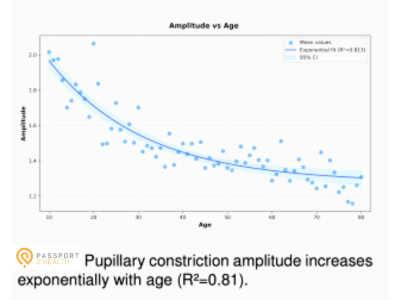
Research shows these measures decline with age and closely reflect overall neural efficiency.
Why This Matters for Your Health
Changes in pupillary responses have been linked to:
Stroke and TIA
Dysautonomia (including POTS)
Cardiovascular disease
Traumatic brain injury
Neurodegenerative conditions
Functional neurological disorders
Because pupillometry is fast, non-invasive, and objective, it can help identify neurological dysfunction earlier, often before more obvious symptoms develop.
How We Use This at Passport 2 Health
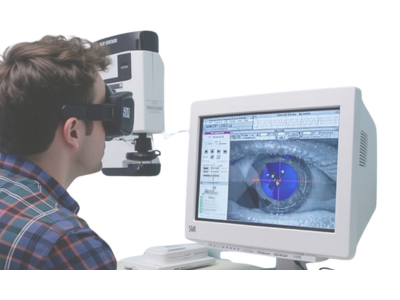
At Passport 2 Health, we use one of the most advanced, clinically validated pupillometers available to assess autonomic and neurological function. This test helps us:
Identify hidden neurological deficits
Personalize treatment plans
Track recovery and improvement over time
In California, access to neurology care can take months. We’ve used this technology to support stroke rehabilitation and neurological recovery before patients were even able to see a neurologist.
Take the First Step Toward Clarity
If you’re experiencing unexplained neurological symptoms or want a clear picture of your brain health, pupillometry may provide the answers you’ve been missing.
👉 Learn how this test applies to your case and start feeling better with a personalized recovery plan:
https://www.passport2health.co/contact
Your health deserves more than guesswork.
